Role
Design Manager and brand experience partner supporting Pittsburgh Yards, focused on translating community vision into a cohesive identity and communication system. I collaborated with stakeholders to create clear, trustworthy design that could scale across public-facing touchpoints.
Timeline
Multi-phase engagement delivered across planning, design, refinement, and rollout. The work evolved as the space, programming, and community storytelling needs became more defined.
Overview
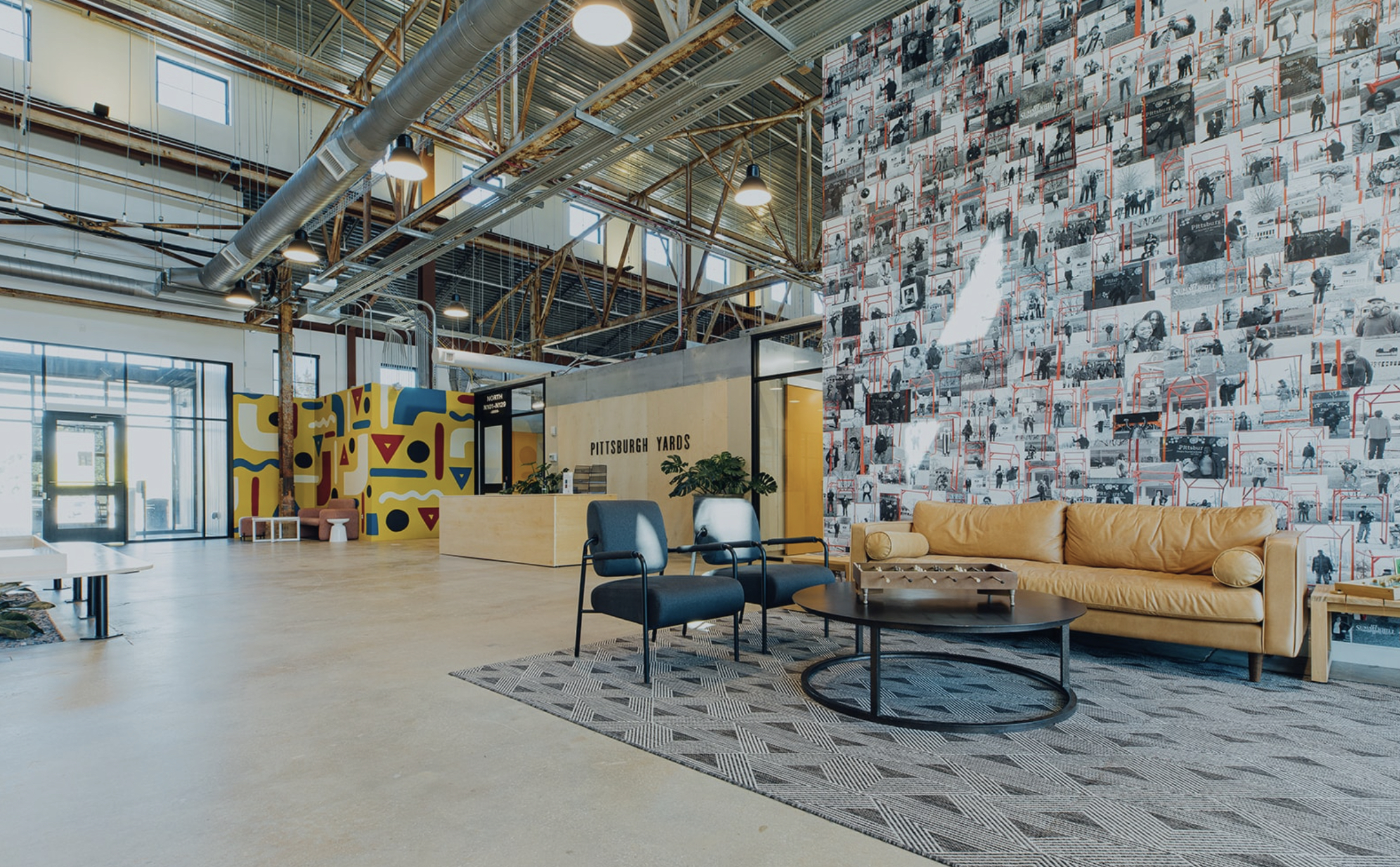
Pittsburgh Yards is a community-centered development designed to support entrepreneurship, creative opportunity, and local economic growth. My work focused on shaping the brand and communication experience so the space could be understood, trusted, and activated by the people it was built for.
Opportunity
Pittsburgh Yards needed a brand system that could hold both purpose and momentum. The opportunity was to create a flexible identity that built credibility with partners and investors while still feeling human, local, and community-first.
Key outcomes
Delivered a cohesive brand identity and visual system that strengthened recognition and improved consistency across communications. Created reusable assets and guidelines that made it easier for the team to promote events, programs, and partnerships with clarity and confidence.
Contributions
Led the design of core identity elements, brand visuals, and key communication assets across digital and print. Built a scalable system that balanced community warmth with professional polish, helping the team show up consistently across audiences and channels.
A little back story + Challenge
Communities across Southwest Atlanta were navigating fragmented communication channels, low trust in existing feedback tools, and limited visibility into how resident input actually shaped decisions.
Town halls generated ideas but not continuity, and surveys collected responses without building shared understanding or long-term momentum. At the same time, residents, youth groups, nonprofits, developers, community leaders, and property managers all carried different priorities, and many communities had varying levels of digital literacy, requiring an experience that was intuitive, accessible, and easy to adopt.
These conditions were made even more complex by lean budgets and staffing, which limited the ability to support complex workflows or custom tooling, and by the reality that engagement needed to scale across multiple neighborhoods, not just a single property or partner. With historical mistrust of “engagement platforms,” Bespeak had to earn credibility through transparency, equity, and visible responsiveness. The core challenge became designing a community engagement system that could create clarity, rebuild trust, and support real collaboration, giving neighborhoods a shared space to visualize priorities, track progress, and participate directly in shaping the future of their community.
A little back story + Challenge
The design needed to account for varied digital literacy, lean budgets, and limited staffing, which meant the experience had to be intuitive and effortless to maintain.
Listening & Alignment
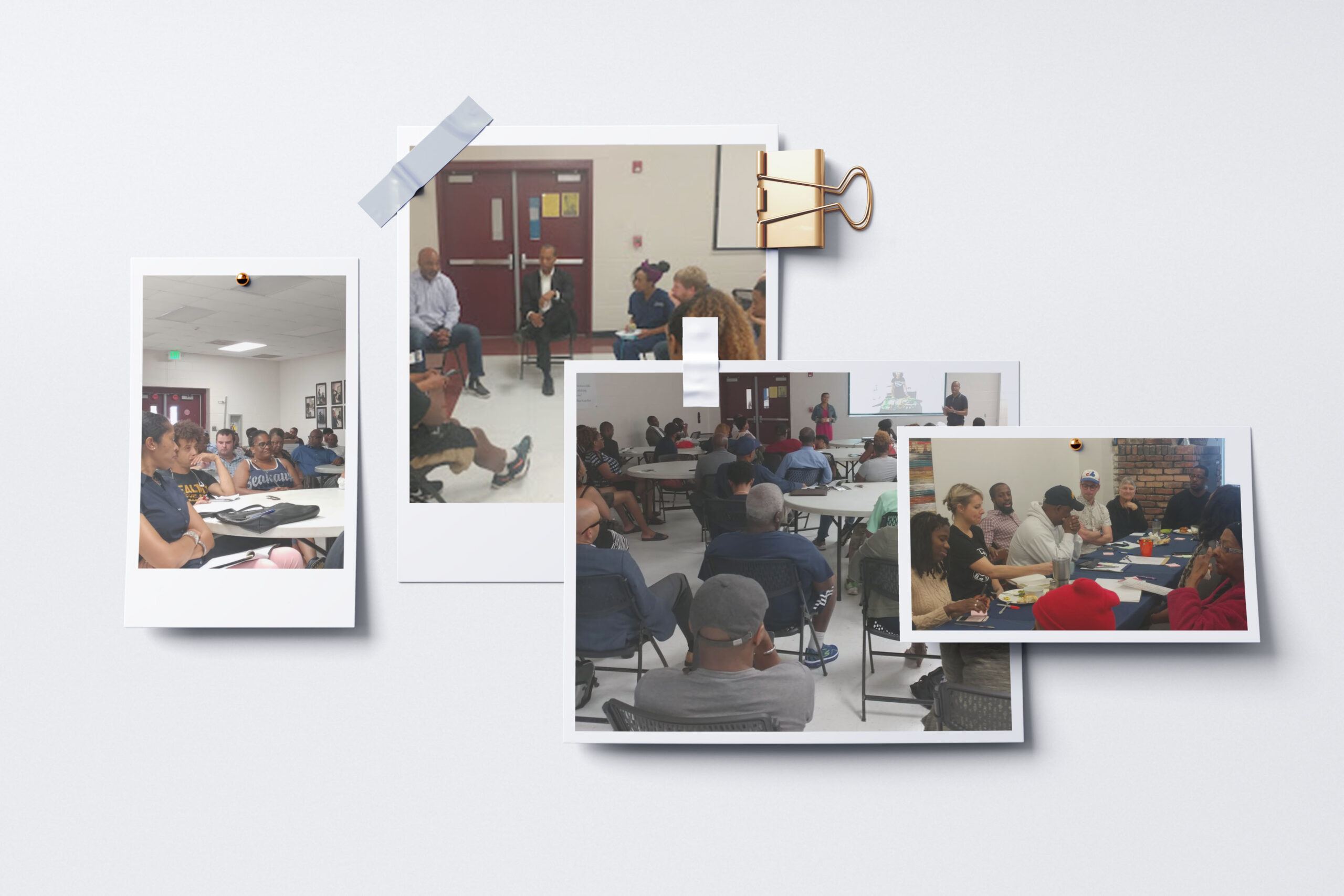
I participated in weekly community meetings to hear firsthand from residents, entrepreneurs, and local stakeholders.
I facilitated conversations that surfaced hopes, fears, priorities, and local identity aspirations.
This listening phase grounded the design in lived experience rather than external assumptions.
Translating Strategy into Identity
With stakeholder and foundation leadership, I distilled the project’s strategic ambitions — economic mobility, entrepreneurship, cultural affirmation, equity — into a design brief rooted in people and place.
I negotiated tensions: between investors’ desire for financial viability, developers’ requirements, and community expectations around authenticity, inclusion, and fair opportunity.
Design & Systems Thinking
I developed a flexible brand and experience system anchored by a “P” mark — a continuous line symbolizing connection across people, history, and opportunity.
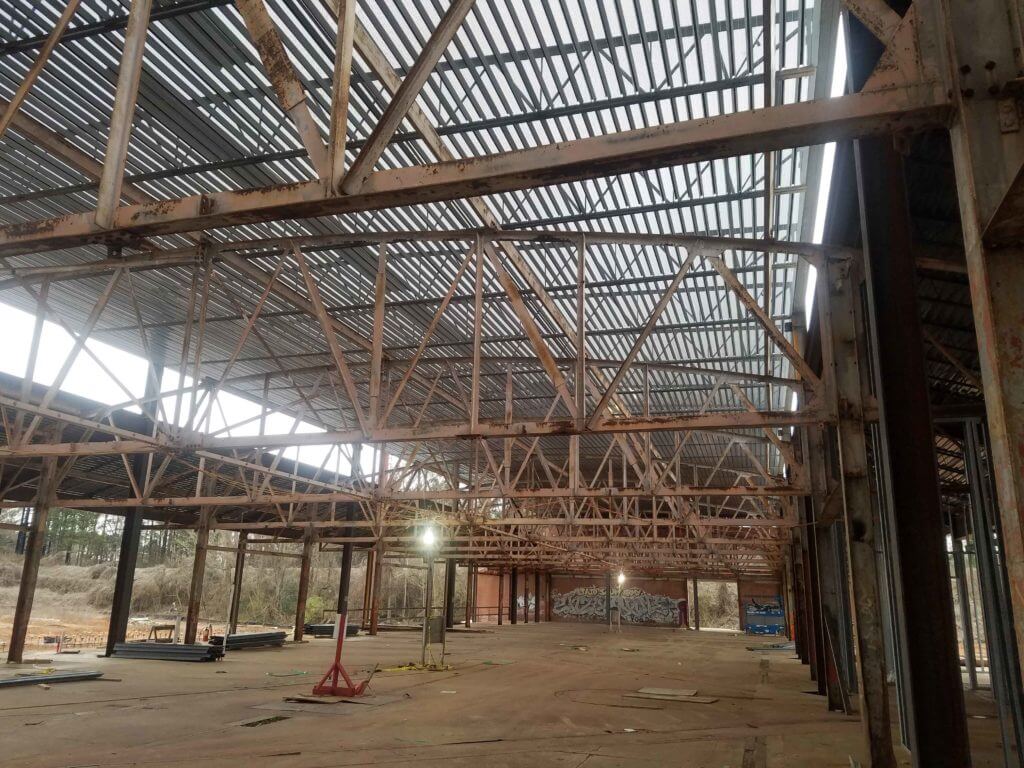
I extended the identity beyond a logo: to physical signage, environmental graphics, digital presence, and spatial storytelling throughout the site (particularly in the Nia Building business hub).
Bridging Design, Activation, and Economic Planning
I worked alongside developers and economic planners to ensure brand integrity was married to functional requirements: leasing, workspace layouts, maker-spaces, and mixed-use programming.
I designed environmental and spatial systems that supported small businesses, entrepreneurs, and creative makers — not just for aesthetics, but for real economic activation and community use.
I treat design as a tool for trust-building as much as for communication.
Results and impact
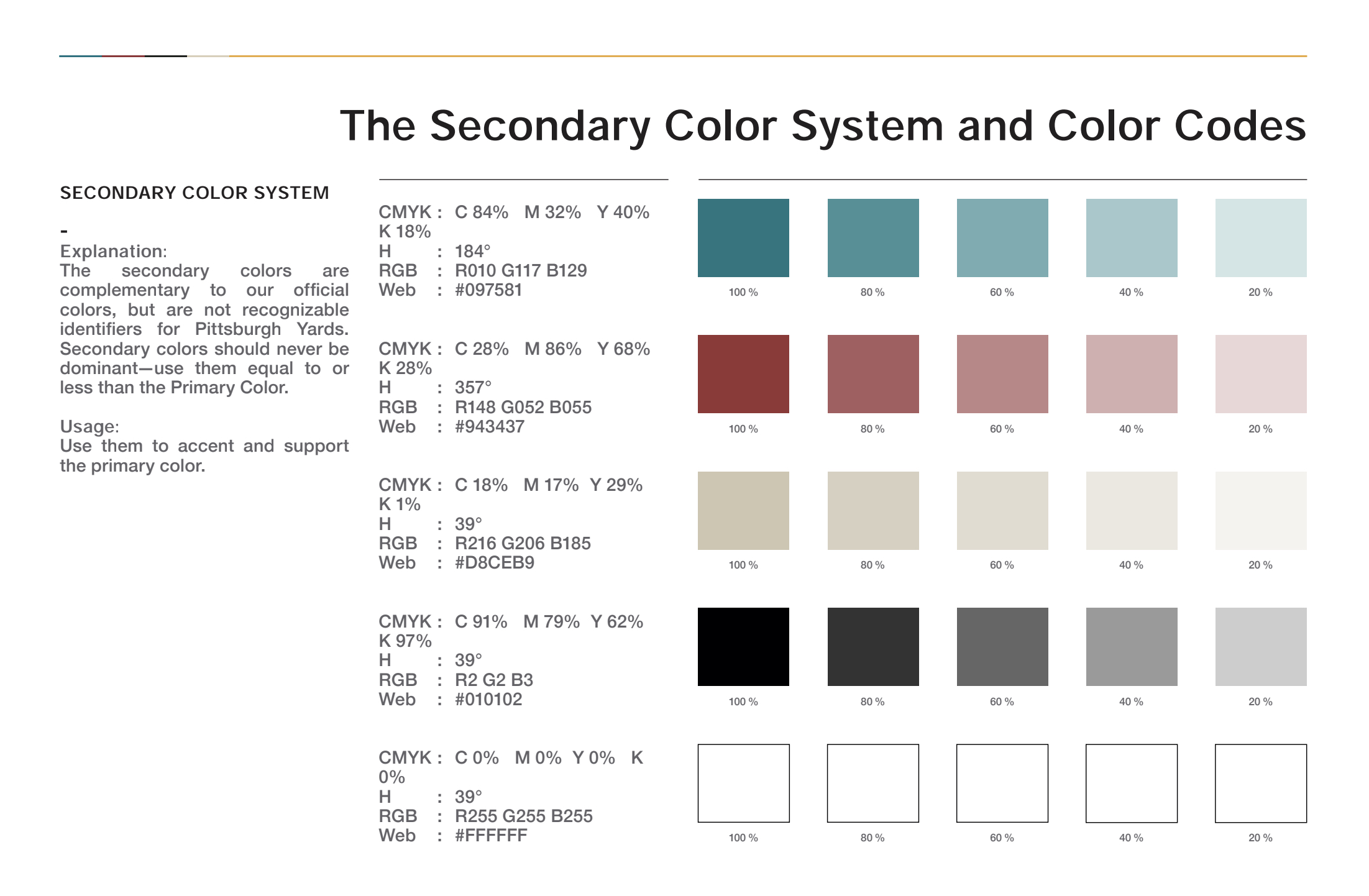
We created a cohesive brand anchored by the “P” mark—a continuous line symbolizing connection across people, history, and opportunity. The result is a living brand-and-experience ecosystem for Pittsburgh Yards.
A brand identity rooted in community values — resilience, creativity, equity — but structured and scalable enough to support real estate development, commercial leasing, and long-term growth.
A design system that spans logo, environmental graphics, signage, spatial design, digital presence — creating a cohesive narrative and sense of place across physical and virtual spaces.
A foundation that connects strategy (economic inclusion, entrepreneurship, community uplift), funding, and local heritage. The design doesn’t just represent a vision — it activates it.


Solution
Supported a $26M+ Phase I development with a unified, community-driven brand and experience framework.
Enabled leasing and activation of 101 small business workspaces inside the Nia Building — advancing entrepreneurship, maker-economy, and job creation.
Helped secure public funding (federal EDA and NMTC grants) — underpinning future growth and supporting a projected 1,000+ long-term jobs as the site evolves.
Created a flexible, scalable identity system and spatial framework that anchors community equity, cultural pride, and economic potential as the site expands — ensuring legacy, inclusion, and growth.
Demonstrated how design can serve as connective tissue — linking social purpose, economic strategy, stakeholder coordination, and lived community identity into a unified, future-ready development.
Hear about the community impact