Role
Product Designer who partnered across design, engineering, product, research, and content to ship scalable publishing experiences and improve how teams deliver globally.
Timeline
October 2021 to present. Ongoing work across multiple releases and initiatives as SharePoint evolves into AI-assisted creation and publishing.
Overview
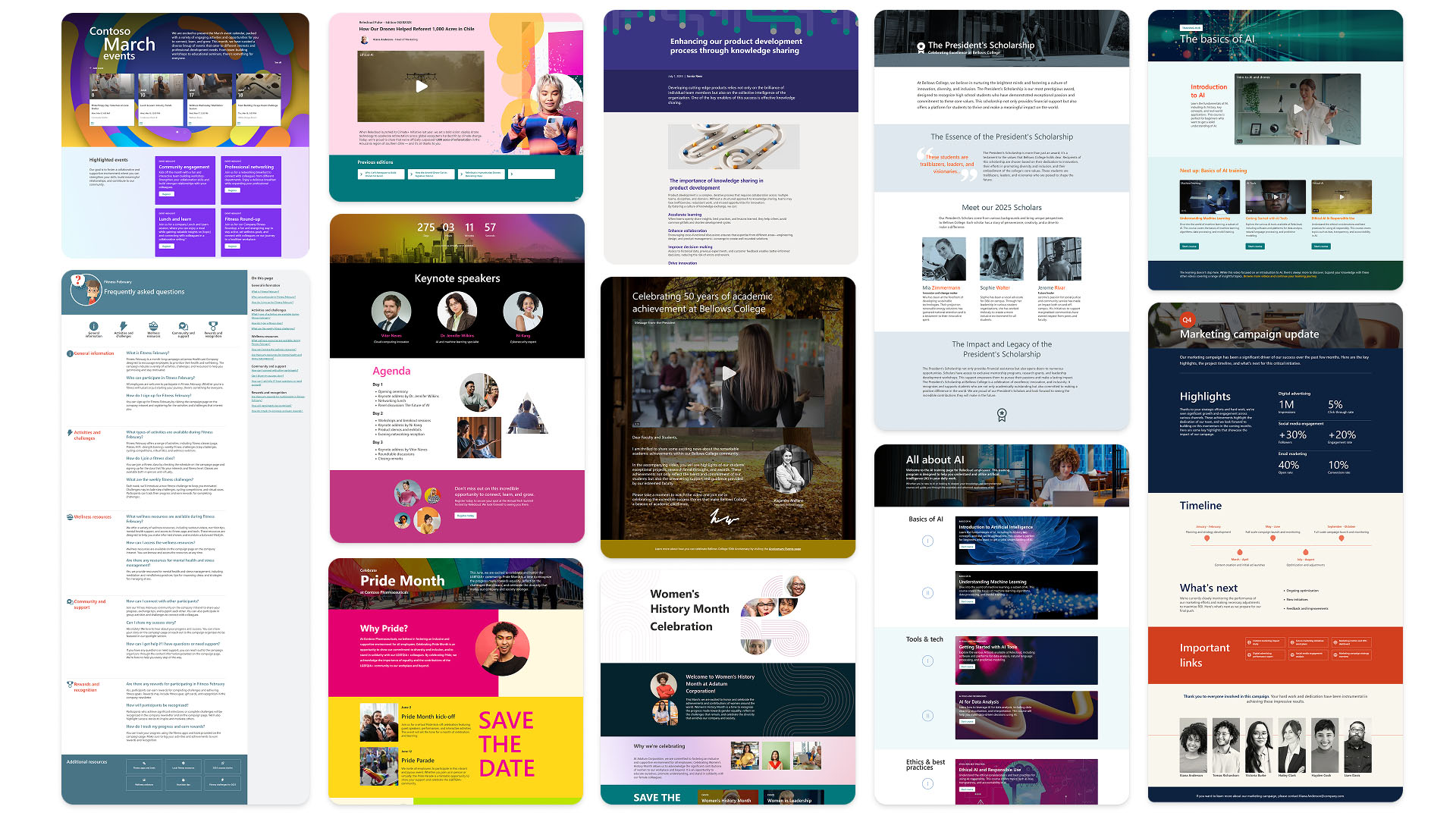
I support SharePoint publishing experiences across Sites, Pages, and authoring in Microsoft 365. My focus is helping teams ship high-quality work at scale by translating shared standards into real product execution.
Opportunity
SharePoint teams were shipping globally, but delivery clarity and handoffs were inconsistent across time zones. The opportunity was to reduce rework and improve speed and fidelity through stronger alignment, documentation, and shared checkpoints.
Key outcomes
Enabled 350+ prototypes, reduced prototyping time 42%, and drove 62% growth in page creation through AI-assisted authoring work. Improved publishing quality with 99% layout fidelity, 46% fewer formatting support tickets, and 22% YoY template engagement growth.
Contributions
Shipped core publishing redesigns and helped standardize workflows, governance, and documentation that improved cross-geo delivery. Mentored designers and supported Fluent adoption across 100+ designers to raise consistency, accessibility readiness, and craft quality.While I was designing conference level solutions about the future o f SharePoint, the fragmented process made my job very challenging


A little back story + Challenge
SharePoint is how millions of people create, publish, and share content across Microsoft 365, powering everything from internal communications to department portals and organization-wide storytelling. As the platform expanded across geographies and entered the AI era, the work became less about designing individual screens and more about designing the conditions for great delivery.
Within the SharePoint design studio, foundational design system efforts established consistency through shared patterns, components, and governance, and my work built on that foundation across the product surfaces where customers publish every day: Sites, Pages, and Publishing. I partnered closely with teams across India, China, Ireland, Canada, and Seattle, and while the work was global, our workflow did not always support global reality. Requirements were often incomplete, design intent reached engineering late, updates did not consistently travel across continents, and decisions made in one geo were not always visible to the next, creating rework, timeline slips, and unnecessary tension.
The issue was never effort or talent. It was the absence of shared structure that respected time zones, cultural working styles, and the operational empathy needed to build great software together. The goal became clear: create a repeatable, human-centered delivery model teams could trust, and use it to ship stronger, faster, and more consistent publishing outcomes at scale.
Designing with constraints
These realities demanded a process that wasn’t “designed for design,” but designed for global collaboration, empathy, and clarity.
We were operating We were operating inside real-world conditions: six time zones across two hemispheres with limited overlap, varying levels of design maturity across partner teams, and frequent communication gaps when decisions were not documented consistently. Over time, process drift weakened confidence in timelines and deliverable quality, all while we were still expected to ship quickly without compromising accessibility, fidelity, or experience consistency.
A “good process” on paper would not survive these constraints. The model needed to be usable, resilient, and respectful of how teams actually worked.
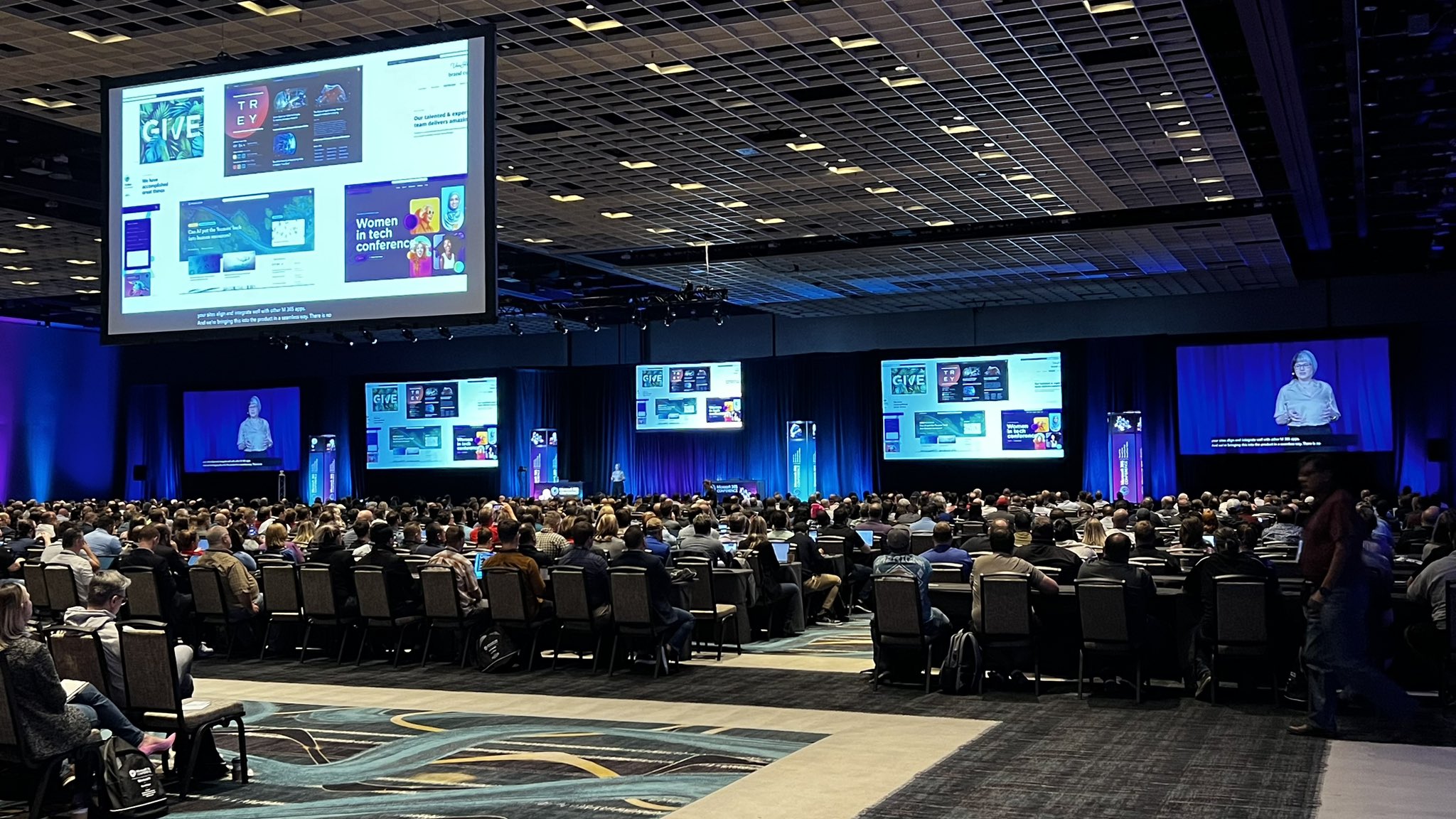
While I was designing conference level solutions about the future o f SharePoint, the fragmented process made my job very challenging.
What I did
I started by speaking with designers, engineers, and PMs across each geo to understand where alignment was breaking down and why. The themes were consistent:
Work started without an agreed-upon vision
Research insights arrived too late to influence build decisions
PM updates did not reliably transfer across continents
Engineering dependencies surfaced too late to guide design choices
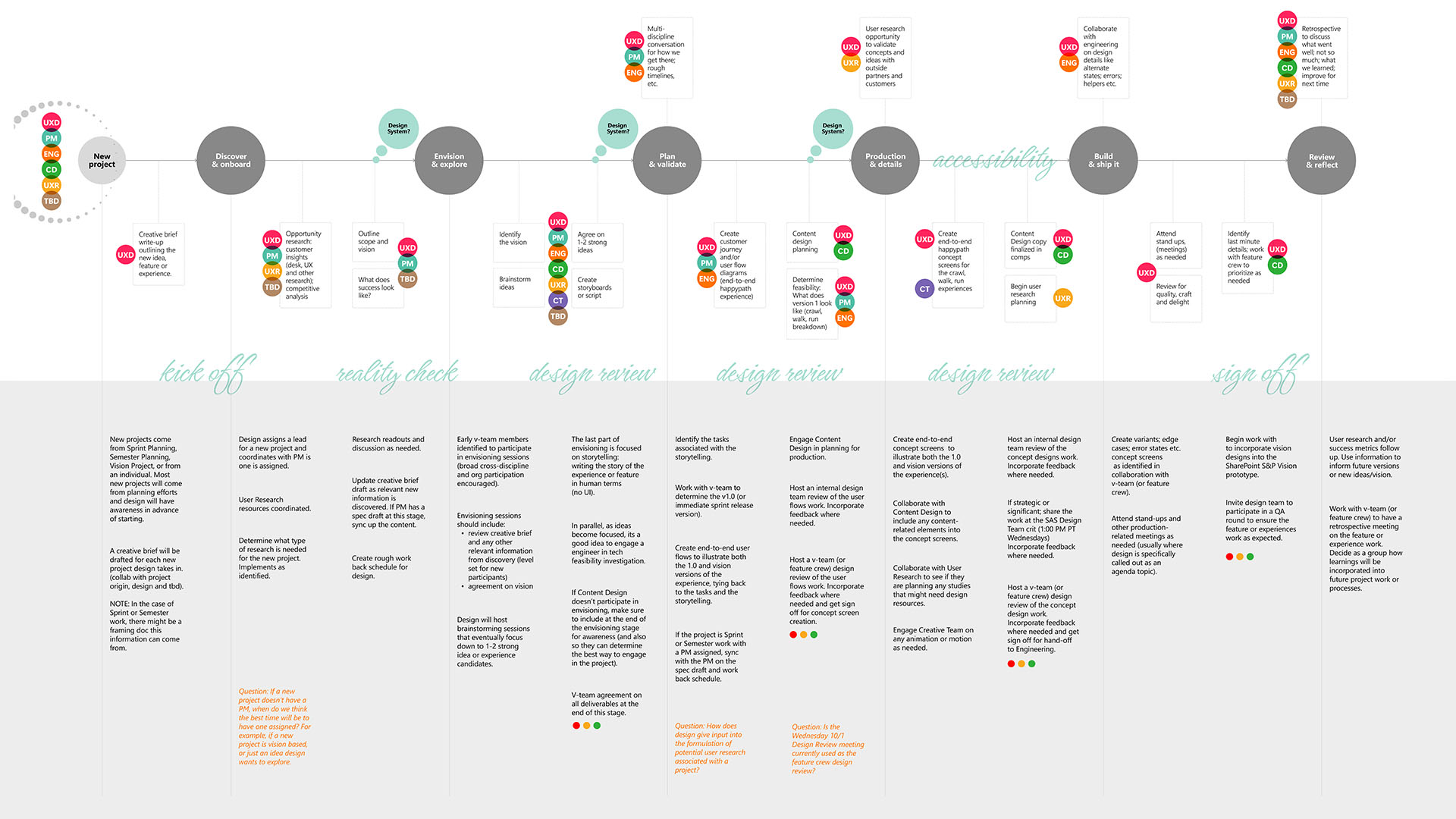
To move beyond individual anecdotes, I mapped these pain points into a service blueprint of our product development ecosystem. This helped us see patterns clearly and identify where earlier connection points would reduce churn later.
From the research, three principles became the foundation of the system:
Clarity – Everyone should know what is happening, what is needed, and by when.
Visibility – Decisions should be documented, traceable, and accessible across geos.
Empathy – The process must respect time zones, workloads, and different communication styles.
These principles kept the system human, not just efficiency.
Model implementation
The result was a global design process — a repeatable, transparent, and empathetic workflow that unified design, engineering, and product across six geographies.
The measurable outcomes were immediate and significant:
Design-to-engineering rework decreased by 35 percent, thanks to clearer alignment before development.
Cross-geo handoff delays dropped nearly 50 percent, enabled by standardized documentation and async workflow clarity.
PMs reported a 40 percent increase in confidence in design timelines and deliverables.
Engineers flagged issues 30 percent earlier because they were included at the right stages.
Design quality improved, with more consistent storytelling, accessibility considerations, and UI alignment.
Morale and trust increased, because the process created psychological safety: people finally knew what to expect and how to succeed.
Most importantly, this new framework allowed me as a remote designer to drive impact across continents without sacrificing velocity or empathy.
It transformed us from a group of distributed teams into a globally coordinated design organization.
Shaping a unified delivery model
We aligned on a structured workflow with clear stages, owners, and expected outputs, improving intake, early feasibility alignment, cross-discipline reviews, accessibility readiness, and post-launch learning. The goal was not more meetings, it was fewer surprises and more predictable execution.
Implementation across geos
I supported adoption through clear documentation, lightweight diagrams, async walkthroughs, and geo-friendly live sessions. Teams embraced the framework because it reduced overhead and removed confusion, making global collaboration easier to sustain.
 Image shapes and advance Image editing broke the authoring flow
→ Authors had limited control once an image was added to a page
→ Making simple adjustments often required extra tools or re-uploading assets
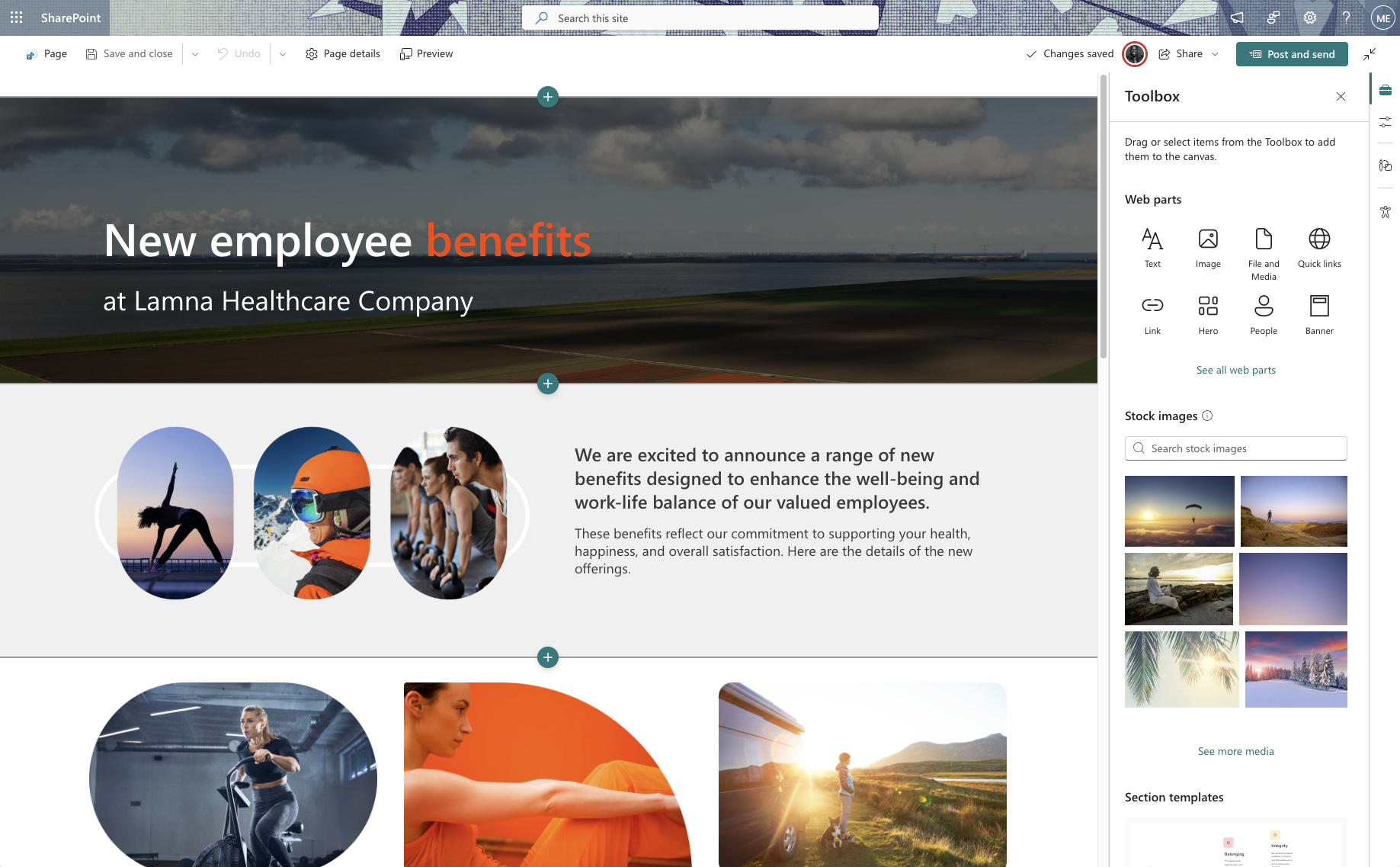
→ Advanced editing brought cropping, filters, and markup directly into the Image web part to keep publishing fast and polished
🎥 Video updates needed a better way to land
→ Teams wanted to spotlight recordings without burying them in long pages or scattered links
→ Creating a polished, shareable video experience took too much manual layout work
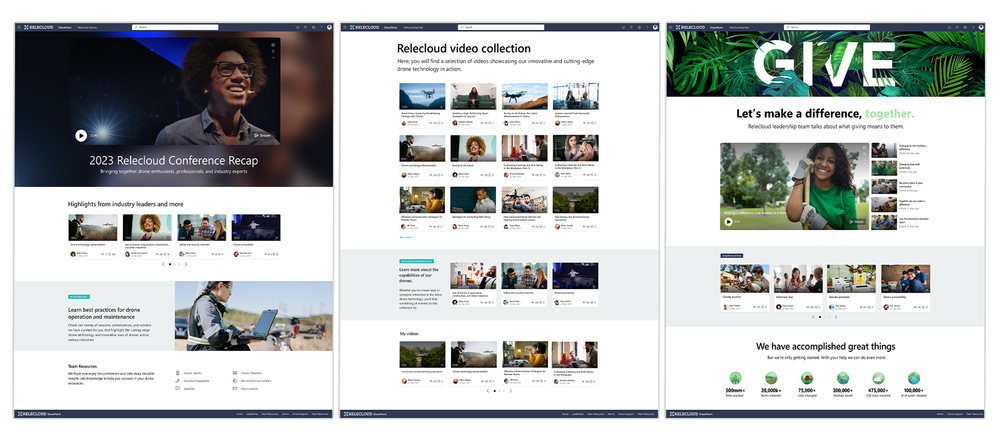
→ Video Page templates make it easy to publish branded Video Pages from SharePoint or directly from Stream, turning recordings into clear, shareable storytelling pages
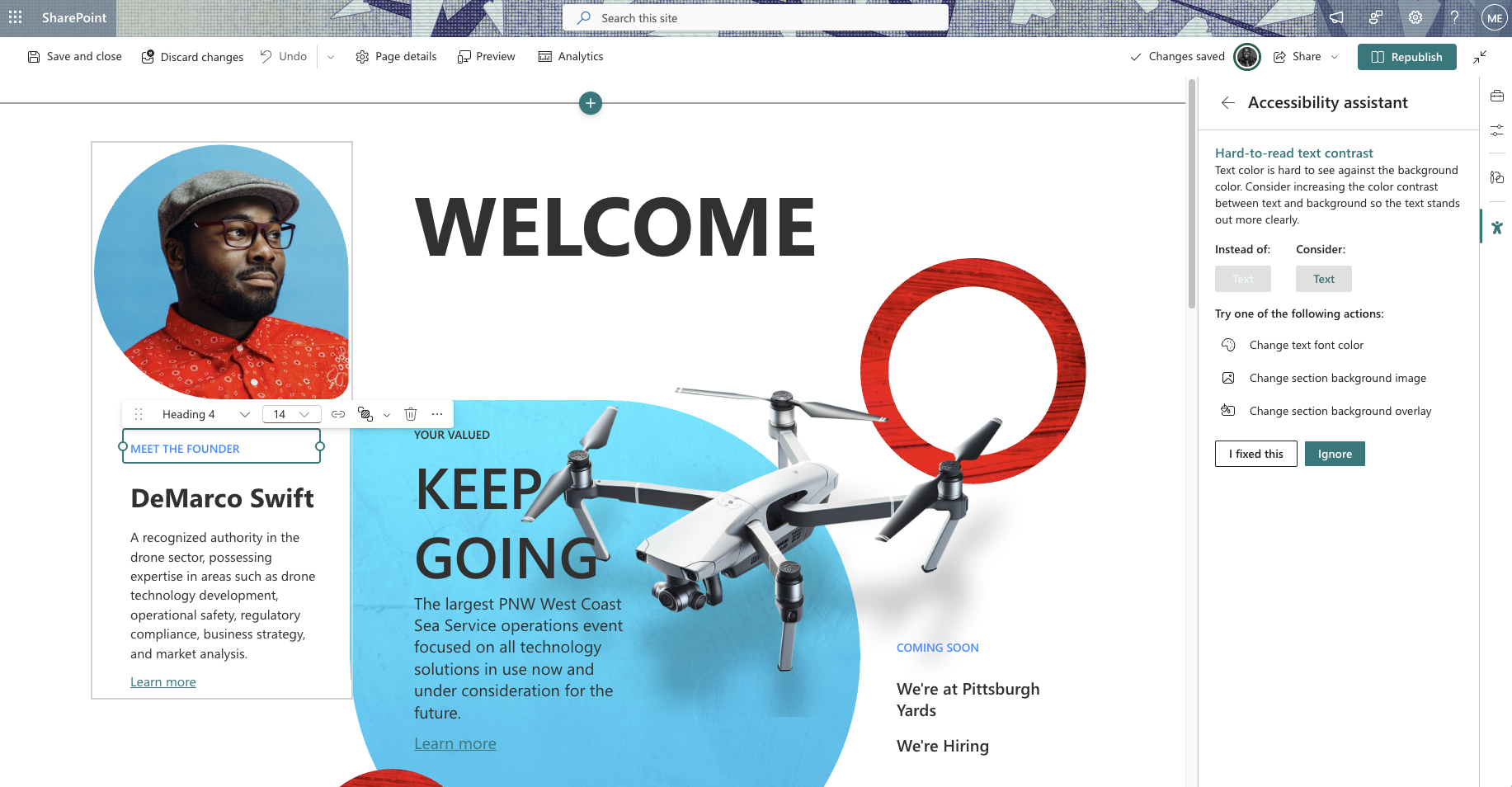
🤝 Authors needed real-time accessibility support
→ Partnering with my China engineering team, we brought accessibility checks into the editing flow
→ The assistant flags issues like headings, alt text, links, tables, and contrast early
→ This made accessible publishing feel built-in, not bolted on
🚀 Publishing needed to be faster without sacrificing quality
→ Page creation was often slowed by layout decisions and uneven starting points
→ Teams needed a clearer, more guided way to begin building content
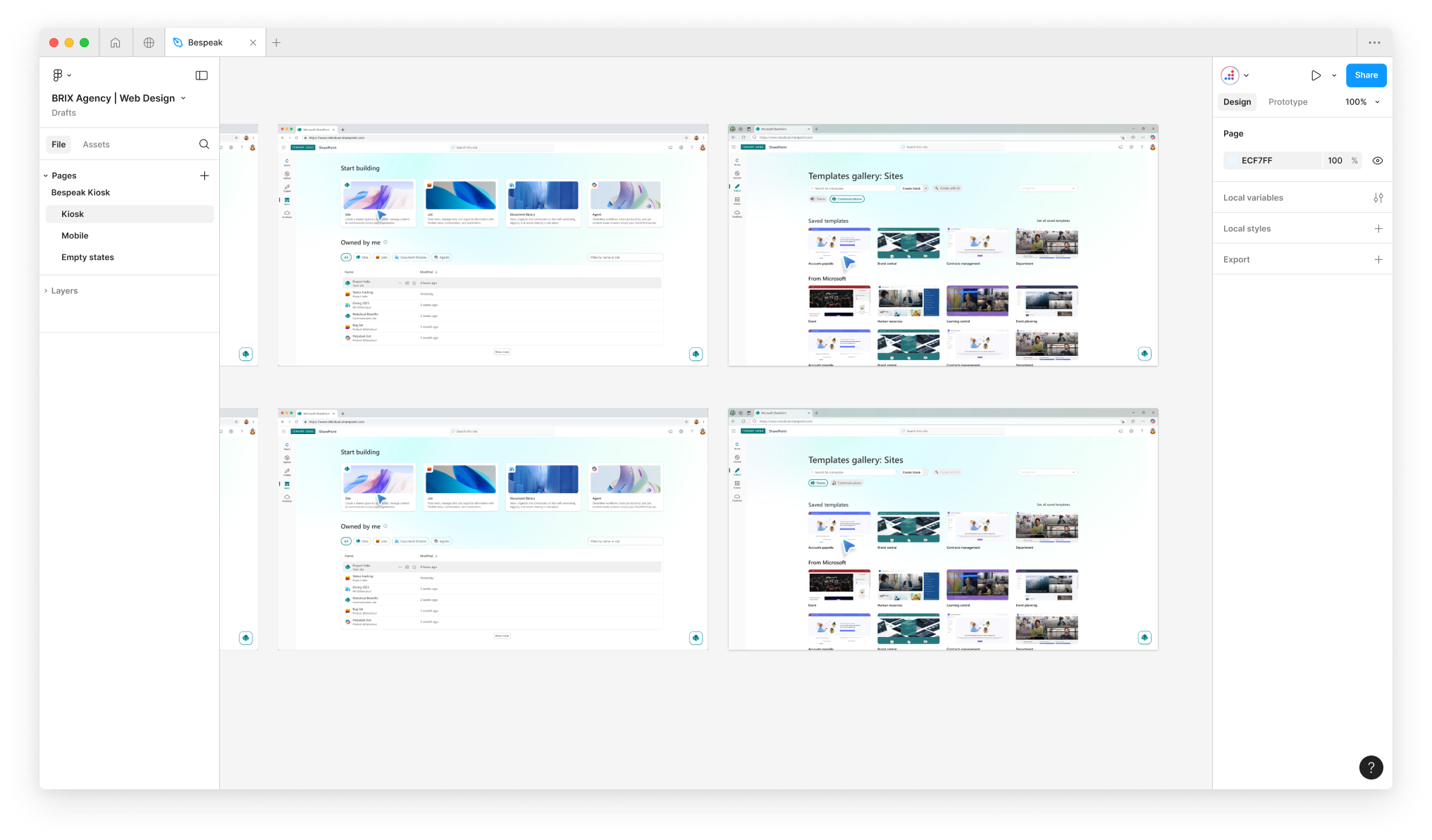
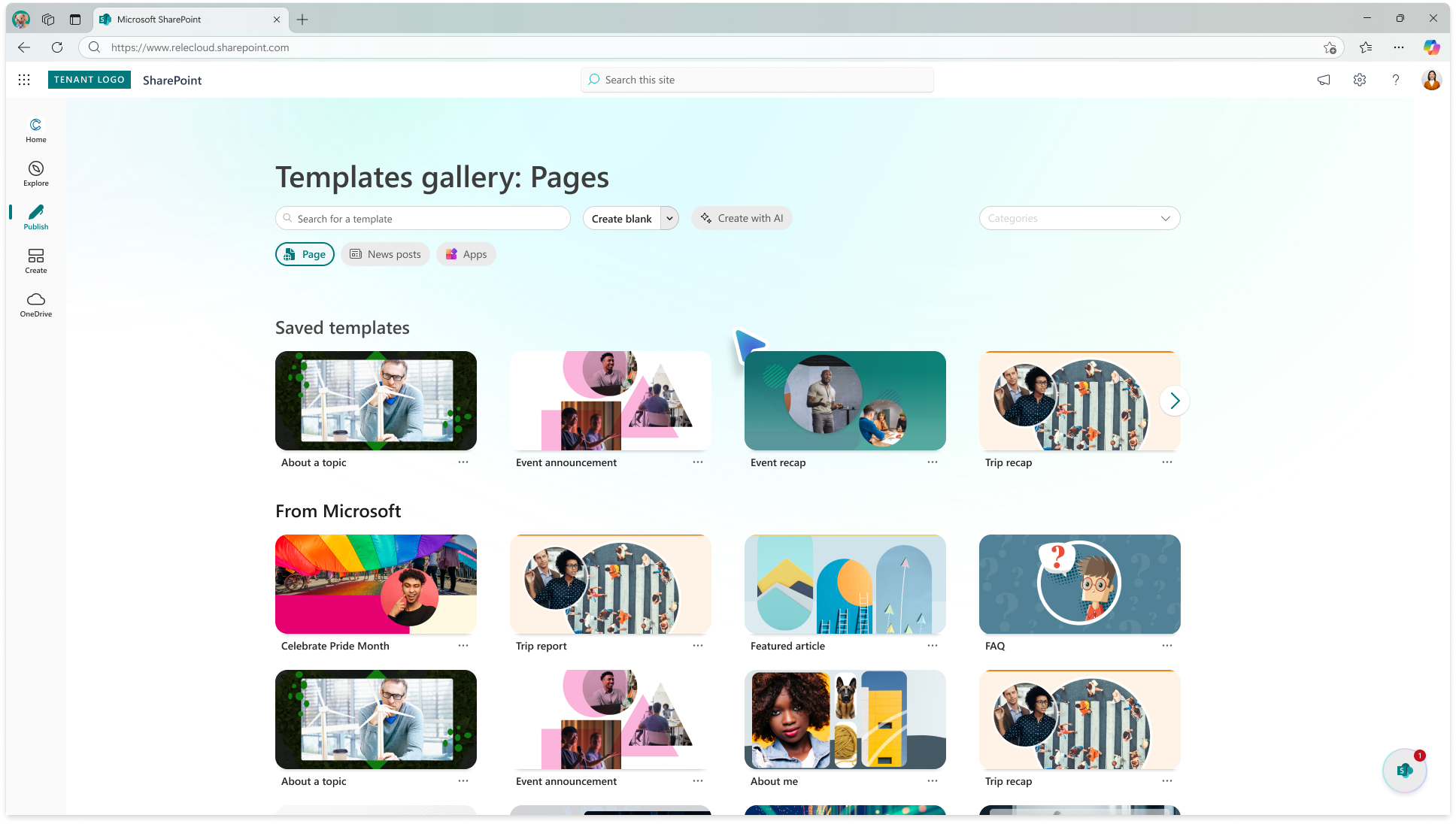
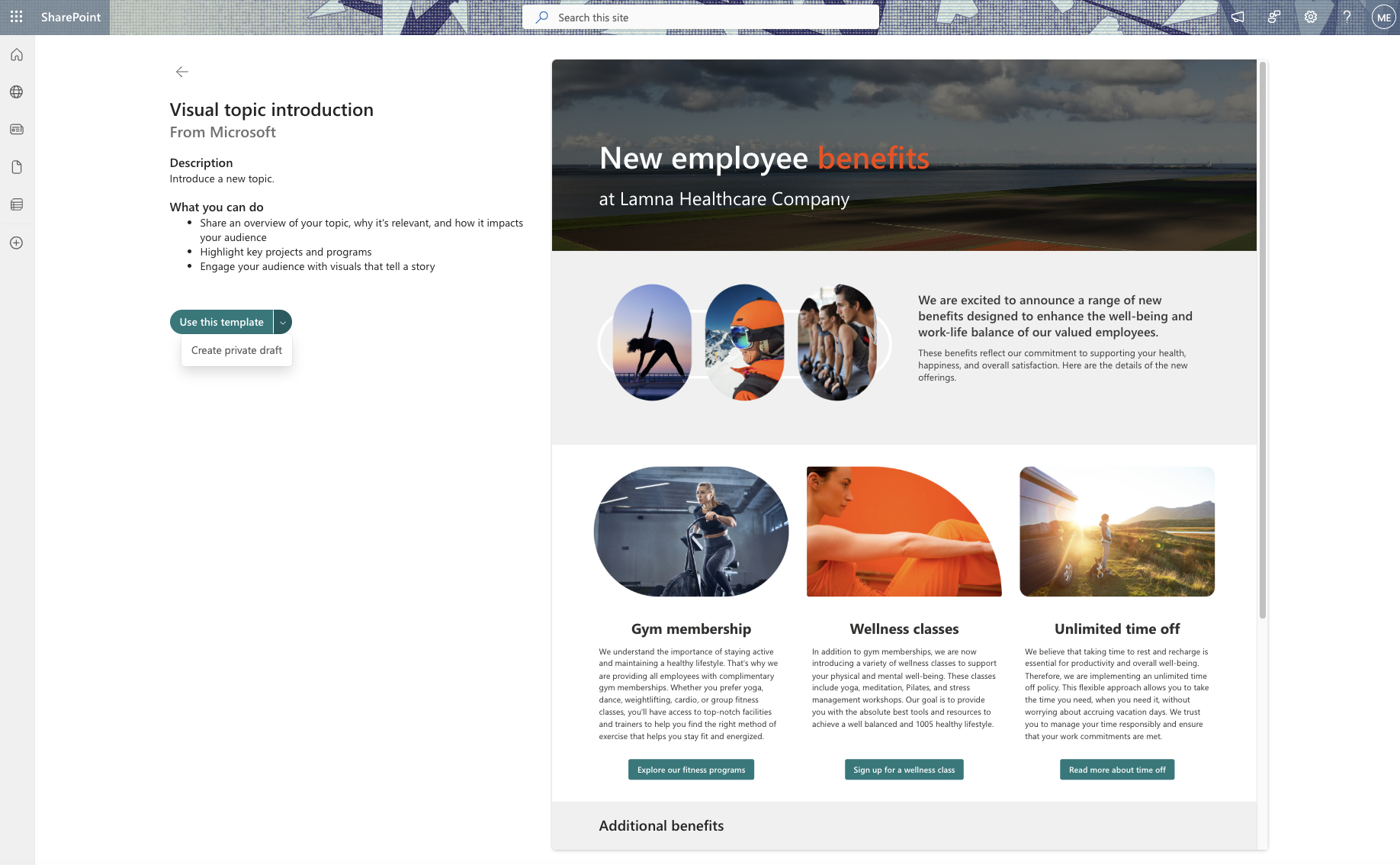
→ The new Template Gallery streamlined discovery and helped authors publish polished pages faster